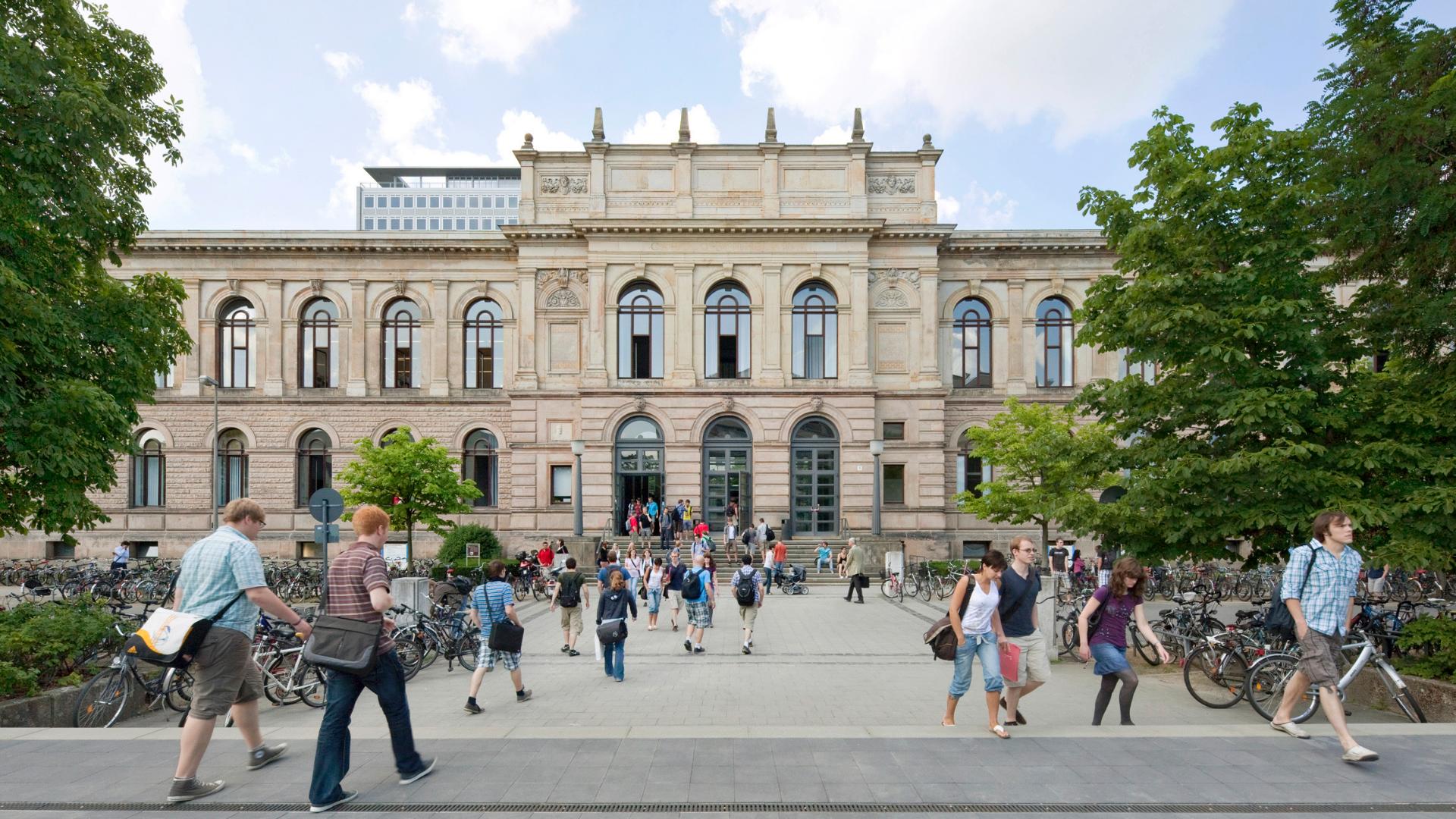

When you think of Germany, a handful of famous names come to mind, but the picture is far wider: more than 400 higher-education institutions across the country, around 120 of them public universities. The range runs from classic research universities to universities of applied sciences, from technical giants to art academies. To find the right one among so many options, you first need to see the map. Below we sort the universities by type and by city; you can find the whole application process in our guide to studying at a university in Germany, and the quality ranking in our best universities ranking.
How Many Universities Are There in Germany?
The short answer: more than 400. Around 120 of them are public universities, over 100 are universities of applied sciences, and the rest are art-and-music academies and private institutions. But the number that probably matters most to you is this: almost all public universities are tuition-free. That single sentence is often what draws students from Turkey to Germany.
Types of University
Although they all fall under the label "university", the difference between them shapes the entire education you receive.
- Universität (classic university): theory- and research-oriented, with the right to award doctorates. If you are thinking of an academic career, this is the right address.
- Technische Universität (TU): the stronghold of engineering and natural sciences. The nine most established form the TU9 alliance.
- Fachhochschule / HAW (applied sciences): closely tied to industry, focused on internships and practice. A perfect fit for those who want to find a job quickly after graduation.
- Private universities: fee-based, but they offer small classes, flexible admission and plenty of English-taught programmes.
Standout Universities by City
Choosing a university is really choosing a city; the place where you will spend your years matters as much as the name of the school. Here are Germany's standout universities, region by region:
- Bavaria: TUM and LMU Munich in Munich; to the north, the boutique-scale University of Bayreuth.
- Berlin and Brandenburg: TU Berlin and FU Berlin in the capital, with the University of Potsdam right next door.
- The west (Rhine-Ruhr): the engineering address RWTH Aachen, the long-established University of Bonn and the Ruhr's dynamic University of Duisburg-Essen (UDE).
- The south-west (Baden-Württemberg): Germany's oldest university, Heidelberg, Freiburg, Tübingen, the economics-focused Mannheim and the technical powerhouse KIT Karlsruhe.
- The north: the port city of Hamburg, Bremen and Osnabrück.
- Other strong names: Justus Liebig Giessen and the technically focused TU Clausthal.
Public or Private?
For students coming from Turkey, the compass almost always points to the same place: a public university. Tuition-free, a globally recognised diploma, academically deep. Private universities offer more flexible admission and more English-taught programmes, but with annual fees of several thousand euros they only make sense for certain profiles.
Which University Should You Choose?
A good choice is made not by name but by three questions: Is my field genuinely strong at this university? Can I afford the city's cost of living? Which language is the programme in? Rankings are a good starting point, but what gets you admitted is field compatibility and a well-crafted file; we gathered that strategy in our strategic application guide.
 WhatsApp Line