
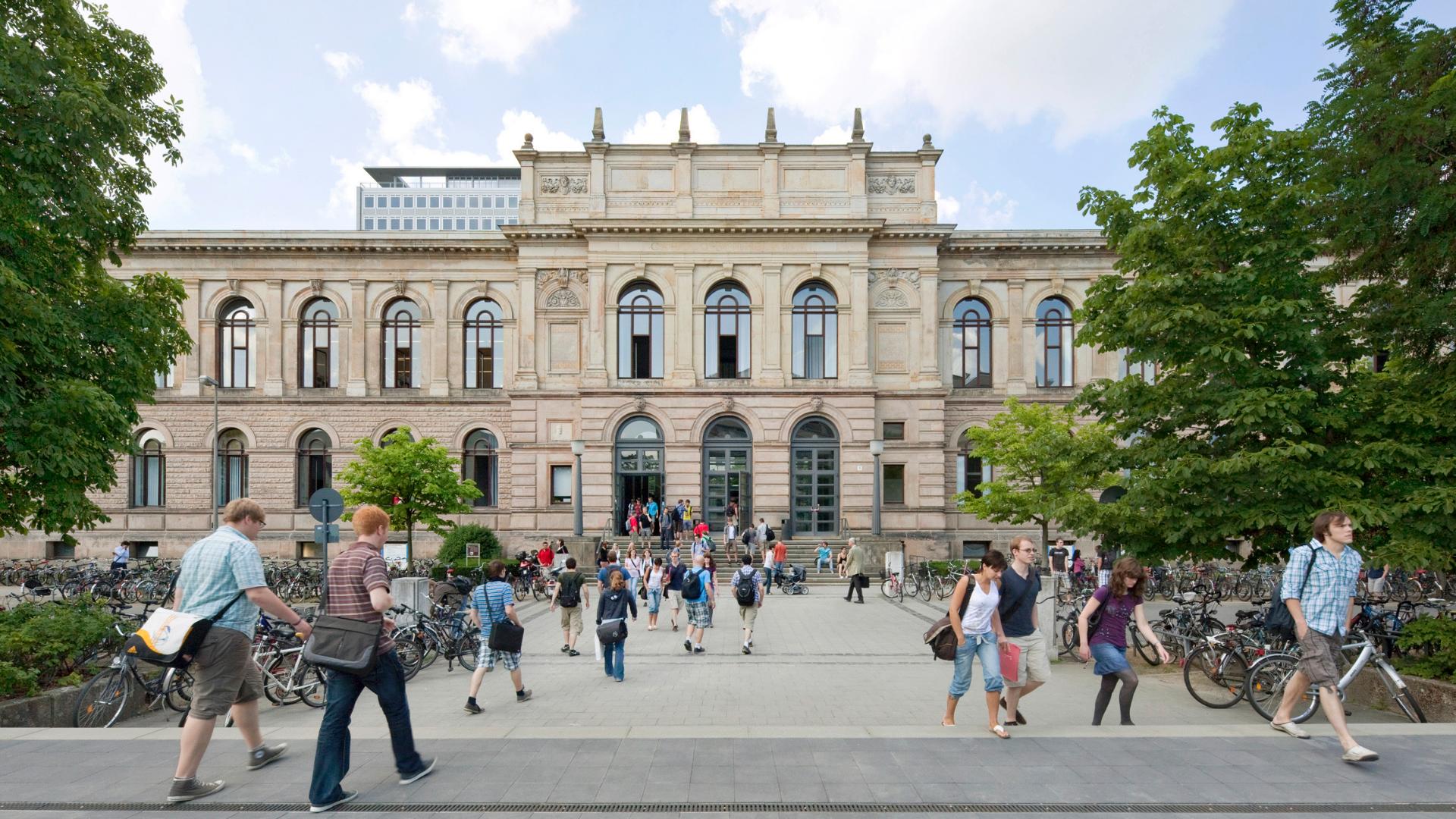
Studying at a university in Germany is one of the most popular routes for students from Turkey seeking higher education abroad. The absence of tuition fees at most public universities, the global recognition of the diploma, and the right to an 18-month post-graduation job-search residence permit are the three core advantages that make Germany unique. In this guide you will find, step by step and with up-to-date 2026 information, who can apply, which documents are required, the application steps, the cost of living, scholarships and the visa process. If you would rather plan the process with an Edur living in Germany instead of tackling it alone, the Toedur team is with you at every stage.
Why Does Studying in Germany Make Sense?
In terms of the conditions it offers international students, Germany is one of the most generous countries in Europe. The most concrete sign of this is that the vast majority of public universities charge no tuition fee; students pay only a per-semester contribution (Semesterbeitrag), usually between €150 and €350. This amount often even covers a local public-transport pass.
The second major advantage is the global recognition of the diploma. The German higher-education system has a globally respected academic tradition, particularly in engineering, natural sciences and medicine. Germany's top universities regularly appear in the global top 100, while the TU9 alliance of technical universities forms a distinct layer of prestige in engineering education.
The third and perhaps most practical advantage is the rights granted after graduation. International students who obtain their diploma can receive a residence permit of up to 18 months to look for work in Germany; qualified jobs found during this period open the path to a work visa and, over the long term, to permanent residence. We cover these advantages and how Germany compares with other countries in our article on why studying in Germany is worthwhile.
The shared observation of our Edurs living in Germany is this: what makes Germany attractive is not only free education but the way education connects directly to the job market. With the right choice of field and city, it is possible to build a career network through internships and part-time work even before graduation.
Who Can Apply? Application Requirements
The first requirement for applying to a bachelor's programme in Germany is that your high-school diploma be recognised as equivalent to the German higher-education entrance qualification (Hochschulzugangsberechtigung). A Turkish high-school diploma alone is in most cases not sufficient for direct admission; you generally need to have studied at least one or two semesters at a recognised university in Turkey, or to complete a preparatory year in Germany known as the Studienkolleg. You can find out exactly how this requirement works and which path suits whom in our guide on who can apply for a bachelor's programme. If you are a two-year associate-degree graduate in Turkey, you can also consider the bachelor's completion in Germany route.
The second decisive factor is language proficiency. Programmes taught in German require the TestDaF or DSH exam, while programmes taught in English require IELTS or TOEFL. Because a significant share of bachelor's programmes at public universities are taught in German, it is crucial to set your target early and start language preparation in good time.
The third factor is the quota system. In some fields, when the number of applications exceeds the quota, a grade-based restriction (Numerus Clausus) is applied. Here, knowing the difference between NC frei and NC manuell is the key to building a realistic list of universities. In addition, most universities request a VPD (Vorprüfungsdokument), which shows the preliminary equivalence of your diploma, before evaluating your application. If you would like a holistic overview of how bachelor's education in Germany works, our comprehensive guide is a good starting point.
Application Steps: The Process From Start to Finish
A German university application is a manageable process when carried out in the right order. The six steps below form the skeleton of a typical application:
- Field and university research: To define your target, weigh both academic fit and the city/cost balance. Our field and programme research guide helps you build the right list.
- Document preparation: Gather documents such as your diploma, transcript, language certificate and motivation letter early.
- VPD / uni-assist process: Most universities accept applications through uni-assist; submit your VPD application in good time.
- Submitting the application: Pay attention to each university's deadline separately.
- Admission letter: Once admitted, you move on to enrolment (Immatrikulation) and the visa process.
- Visa and arrival: The student visa application and the steps to settle in Germany.
The competitive part of the application is document quality. A strong strategic application plan, a well-crafted motivation letter, a CV prepared in the Europass format and a reference letter obtained on time are the elements that set your application apart from the rest.
Required Documents
The table below summarises the core documents requested in a typical bachelor's application. Additional documents may be required depending on the field and university.
| Document | Description | Note |
|---|---|---|
| High-school diploma + transcript | Sworn translation (German/English) | Notarised / apostille |
| Language certificate | TestDaF, DSH or IELTS/TOEFL | Depends on the programme language |
| VPD | uni-assist preliminary equivalence document | Required by most universities |
| Motivation letter | Written specifically for the programme | — |
| CV (Europass) | Academic and personal background | — |
| Passport | Validity period should be checked | — |
To make sure your documents are complete, we recommend keeping our document checklist and full breakdown of required documents guides at hand.
Top Universities and Popular Fields
There are hundreds of public universities in Germany, and almost all of them have a strong academic foundation. Still, certain institutions stand out in both global rankings and graduate employment. If you are focused on engineering and technology, the Technical University of Munich (TUM), RWTH Aachen and TU Berlin are the first institutions you should consider. If you are looking for a broad range of fields and a deep-rooted academic tradition, LMU Munich and Heidelberg University stand out. We gathered every German university by type and city in our guide to universities in Germany, and the options for those who want to study only in English in our studying-in-English guide.
In choosing a field, it is not only the name of the university that matters, but also that field's research strength, industry connections and post-graduation employment rate. Among students coming from Turkey, the most preferred areas are engineering, medicine, law, business and software engineering.
Cost and Financing
Although there is no tuition fee at most public universities in Germany, living expenses and the financial guarantee required for the visa call for serious planning. The table below summarises a typical budget for 2026:
| Item | Approximate Amount | Note |
|---|---|---|
| Tuition fee (public univ.) | ~€0 | Per-semester contribution ~€150-350 |
| Monthly living expenses | ~€934 | Blocked-account reference amount |
| Blocked account (annual) | ~€11,208 | Mandatory for the visa |
| Health insurance | ~€120/month | Mandatory |
One of the most effective ways to offset the cost is scholarships. DAAD scholarships offer one of the best-known and most comprehensive support programmes for students applying from Turkey; early planning significantly increases your chances of winning a scholarship.
Visa and After Arriving in Germany
After receiving your admission letter, the next step is the student visa. You can find the steps of the process and the points to watch out for in detail in our student visa guide. One inseparable part of the visa application is health insurance; valid health insurance is mandatory for registration and the visa in Germany.
After arriving in Germany, tasks such as residence registration (Anmeldung), opening a bank account and university enrolment await you. Our guide on what to do after arriving in Germany, which explains step by step what to do in the first days, makes the transition much easier. If you are curious about daily life, accommodation and budgeting in Germany, our living in Germany: a student guide is a comprehensive starting point.
 WhatsApp Line